

The history of the Guachinche begins in the rural wine regions of northern Tenerife, born of a simple economic need.
Although some stories suggest background since the 17th century, the phenomenon was further consolidated in the mid-20th century.
The small winegrowers, seeking to sell the surplus of home wine, established informal posts in their own homes - often in a garage, yard or warehouse - to sell directly to local consumers and British traders, thus avoiding intermediaries.
To improve the wine tasting experience, these farmers began to offer simple and traditional home dishes.
This practice gradually transformed these humble points of sale of wine into dear culinary and social centers, celebrated for their authenticity.
The debate «Bocinghe» vs «I'm Watching You»
The etymology of the word «guachinche» is disputed, with two main theories:
The Theory of English Origin
A popular and romantic version states that the term derives from the English phrase «I'm watching you».
According to this story, British traders used the phrase to point out that they were ready to inspect and test the wine, which local farmers phonetically adapted to «guachinche» to refer to the tasting place.
The Theory of the 'Bochinche'
A more plausible theory linguistically, supported by the Canary Academy of Language, rastrea «guachinche» until the Spanish word Latin American «bocinghe».
«Bocinghe» means a «poor tavern» or «noisy meeting» and is believed to be derived from «mothe» (a sip or drink).
This term remains the preferred variant on the island of Gran Canaria for functionally identical establishments, suggesting that «guachinche» is a dialectal evolution specific to Tenerife.
Chronology of Key Inflexation Points
The evolution of the Guachinches from informal meetings to regulated cultural icons is marked by several critical moments of social, economic and legal change.
| Period | Key Event | Description and Impact |
|---|---|---|
| XVII- 20th century | Informal origins | The winegrowers in northern Tenerife start selling surplus wine directly from their homes, often accompanied by simple food, to avoid intermediaries and supplement income. This sets the fundamental model. |
| End of the 20th century | Growing Popularity and Friction | The Guachinches grow as popular social and culinary centers. This success generates complaints from the formal restoration sector about unfair competition from these largely unregulated businesses. |
| 2009 | Registered Brand Disorder | A private individual records the word "guachinche" as a brand name, creating legal uncertainty and causing the Canarian government to challenge registration to protect the term as public heritage. |
| 2013 | Promulge Decree 83 / 2013 | This historical law formally defines and regulates the Guachinches. It states that they must be managed by the winemaker, sell only their own wine, operate for a maximum of four months and offer no more than three dishes. This was a decisive moment, with the aim of preserving authenticity while addressing competition concerns. |
| 2019 | Agro-food Quality Act | The government of the Canary Islands further solidifies the legal status of the Guachinches by including the term as a protected and regulated category in its agrifood quality law, strengthening controls against abuse. |
| 2023-Present | Preservation Efforts and Continental Challenges | Initiatives like the project are emerging «Arraigados en la Tradition» from Slow Food to support the authentic Guachinches. Despite legal protections, the number of registered establishments remains low and widespread abuse of the term persists. |
Cultural and Social Woven
The Community Hall
These establishments serve as vital spaces for community meeting, acting as real social centres where friends, families and neighbors converge into a relaxed and family atmosphere.
Custodians of the Peasant cuisine
By focusing on a limited menu of traditional dishes, the Guachinches preserve and celebrate the rich culinary heritage of the island.
They are temples for dishes like the Gofio scale (a stew of roasted grain flour with roots in the pre-Hispanic guanche diet), wrinkled potatoes with mojo, Sage rabbit (rabbit stew) and party meat (marinated pig).


Symbols of Authenticity
The same symbols of a Guachinche - the simple home sign, unlabelled wine served as a barrel, decoration without pretensions - are imbued with cultural meaning.

They mean a connection to the land and a rejection of commercial claim, embodying a way of life rooted in agriculture, the family and the community.
This makes them a powerful symbol of local identity, now being consciously protected by community initiatives that seek to help them adapt without losing their essential character.
Economic engine
The economic model of a Guachinche is a direct consumer system (D2C) rooted in small-scale agriculture, providing a vital economic livelihood for many wine growers in Tenerife.
Direct to Consumer Wine Margins
The core of the business is the sale of the surplus home wine produced by the owner, who must be a registered farmer with own or exploited vineyards.
Cost structure
Although historically informal, the promulgation of Decree 83 / 2013 introduced significant regulatory and enforcement costs. The main cost factors have changed from simple production to a formal legal framework.
| Cost category | Description | Key Components |
|---|---|---|
| Regulatory and Compliance | Costs associated with obtaining and maintaining legal status. | Registration of hold, opening licences, annual responsible statements cabildo. |
| Health and Food Safety | Investment to meet strict hygiene standards for premises and staff. | Adequate lighting, ventilation, sanitary facilities and certified training in hygienic handling of food for all personnel. |
| Labour costs | Costs related to formal employment. | Registration of the owner and employees in the social security system and compliance with labour regulations. |
| Taxation | Financial burden of declaring revenue to the Tax Agency (Finance). | A significant change in the previously informal and tax-free model. |
| Provision and infrastructure | Costs of food ingredients and mandatory identification. | Obtaining ingredients for the menu (if not of own production) and display of the mandatory approved distinctive plate. |
Seasonal Flow Model
The business model is defined by its stationary nature. The operations are legally limited to a maximum of four months per year and must cease once the stock of wine of own production is exhausted.
This creates a temporary establishment in style «pop-up», traditionally opened from late autumn (often beginning on St. Andrew's Day, November 30) to early spring.
A typical small-scale operator that sells between 3,000-6,000 litres of wine can generate substantial income in this short window, creating a concentrated peak of cash flow that supports your agricultural activities for the rest of the year.
Regulatory overview
The legal framework governing the Guachinches is central to their modern identity, creating a protected but very restricted operating environment.
The picture is defined by the conflict between preserving tradition and the pressures of the formal economy.
Decree 83 / 2013
The 2013 decree was a response to friction with the formal restoration sector and sought to codify the authentic Guachinche.
It established strict rules to differentiate them from conventional restaurants.
| Requirement | Guachinche (Decree 83 / 2013) | Restaurant / Conventional Bar |
|---|---|---|
| Main output | You must sell wine from the owner's vineyards. | You can sell any wine and drink commercially available. |
| Operational period | Maximum 4 months per year; you must close when the wine is finished. | It can operate all year round without restriction. |
| Food Menu | Maximum 3 prepared dishes, more simple accompaniments (e.g., pickles, nuts). | Unlimited menu offers. |
| Drink Menu | Strictly limited to owner's wine and water. Drinks, beer and coffee are prohibited. | Full range of alcoholic and non-alcoholic beverages. |
| Legal status | It is considered a complementary tourist / agricultural activity. | Classified as a complete restoration establishment. |
The Compliance Bret: 23 Legals vs. 173 Self-declared
Implementation and compliance remain the greatest challenges. From 2023, the data from the Tenerife Cabildo showed that only 23 establishments were officially registered under Decree 83 / 2013.
This is in sharp contrast to the 173 establishments identified as using the name «guachinche» during inspections between 2013 and 2023.
This discrepancy reveals two main trends:
- Reclassification Evasion: Many operators are registered as bars, tasas or restaurants to avoid seasonal and menu limitations, allowing them to operate all year round with a wider offer.
- Persistent information: A significant number of establishments use the name «guachinche» for its appeal to marketing without meeting any of the legal criteria, a practice that has even been extended to peninsular Spain.
Bars of Trademark and Geographical Indication
The struggle to protect the term «guachinche» is prior to the 2013 decree. In 2009a private individual successfully registered the word as a trade mark, creating legal confusion and threatening its use as a term of public heritage.
The Canarian government responded by challenging registration and strengthening administrative identifiers, such as the official badge, to help consumers identify compliant premises.
The Agro-food Quality Act 2019 solidified even more this protection by formally incorporating «guachinche» as a legally recognized and regulated category.
Despite these efforts, widespread abuse of the term persists, underlining the continuing difficulty in protecting this unique designation.
Risk Matrix
The long-term sustainability of traditional Guachinches faces several critical risks that threaten their cultural and economic viability.
| Risk Category | Description | Impact Level | Probability |
|---|---|---|---|
| Generational succession | The younger generations are deterred by complex regulations and low profitability, leading to a lack of successors to continue family establishments. | Stop | Stop |
| Regulatory pressure | The rigidity of Decree 83 / 2013 (4 months limit, 3-course limit) leads operators to close, remain informal or become restaurants, reducing the group of authentic Guachinches. | Stop | Stop |
| Marking Dilution | The widespread abuse of the name «guachinche» non-compliant restaurants confuse consumers and undermine the value and authenticity of legally registered establishments. | Stop | Stop |
| Climate Change | The increase in drought, water scarcity and altered climate patterns threaten the yield of grapes, which is the basis of the Guachinche business model, potentially shortening seasons and reducing supply. | Medium | Stop |
| Tourist overload | Although beneficial, excessive tourism can lead to «tourism» from experience, where authenticity is diluted to attend to the tastes of the mass market, eroding the character that makes them unique. | Medium | Medium |
Land and Viticulture
The identity of a Guachinche is inseparable from the earth.
The unique geography and wine practices of Tenerife define the wine that is the heart of the experience.
About Canary Wine - eBook by guachinchescanarias
Geographical Concentration in the North
The authentic Guachinches are overwhelmingly concentrated in the municipalities of northern Tenerife, their historic place of birth. Key areas include The Orotava, The Matanza de Acentejo, The Victory of Acentejo, Santa Ursula, Tatoronte, El Sauzal and The Realejos.
This region, particularly the Acentejo-Valle de la Orotava, houses the vast majority of these establishments, rooted in the most important wine areas of the island.
Volcanic floors and Listan grapes
The volcanic origins of Tenerife deeply shape its terroir, giving a distinctive minerality to the wines.
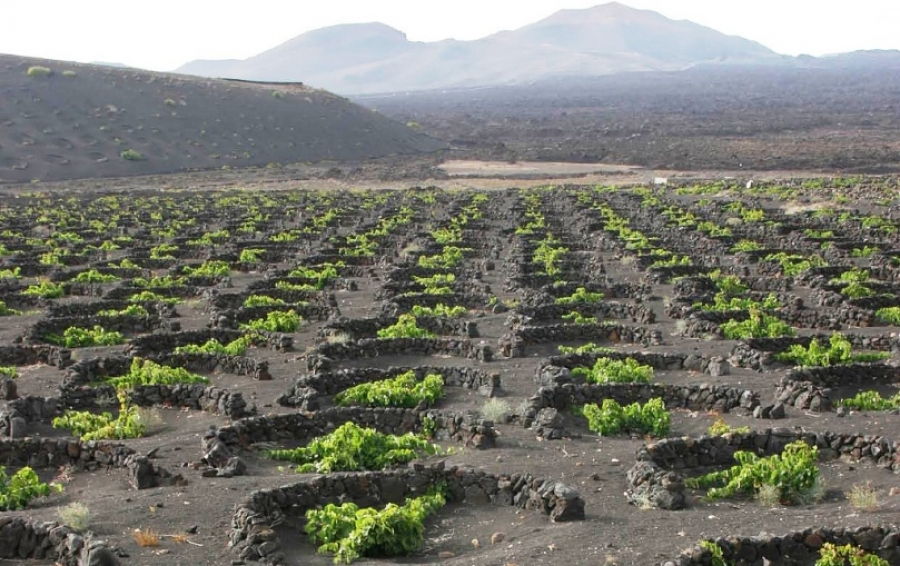
The island's various micrometers, influenced by the altitude and refreshing winds, create ideal conditions for its native grape varieties.
The most prominent grapes found in the wines of Guachinche are:
- Tintas varieties: Black Listanproducing aromatic and fruity wines; and Negramoll, known for the velvety texture it imparts.
- White varieties: White Listan is common, along with Malvasía, Gual and Albillo Criollo.
The Ingenius of the 'Trenzado Cordo'
The steep and challenging terrain of the vineyards of Tenerife led to the development of unique systems of life management.
The most famous is the 'Trench Cordo' (braided cord), a centenary method prevalent in the Orotava Valley.
This system involves braiding vine branches into long, sometimes multi-meter cords.
This allows farmers to release fertile land under latent vines to grow other crops such as potatoes during the winter, a remarkable adaptation to the landscape.
Culinary core
While wine is the reason for the existence of a Guachinche, food is his soul.
The kitchen is simple, abundant and deeply traditional, acting as the guardian of the canarian culinary heritage.
The Three-Dot Limit
Under Decree 83 / 2013, an official Guachinche is legally restricted to offering a maximum of three different prepared dishes.
This rule is designed to preserve its character and prevent them from becoming complete restaurants.
The additional elements are limited to simple accompaniments such as pickles, nuts and locally grown fruit.
A Canarian Classic Menu
The menu is a celebration of traditional canarian home food. The common dishes include:
- Ruined Popes with Mojo (popes wrinkled with red and green sauces)
- Gofio scale (a substantial stew of roasted grain flour)
- Fiesta meat (marinated and fried pig)
- Rabbit in Salmorejo (marinated rabbit stew)
- Old clothes (meat casserole)
- Garbanzas (chickpeas stew)
- Asado cheese with Mojo (grilled cheese with wet sauce)

Hi, I'm Juan, a boy born and raised in Tenerife. Since I was a kid, food has been my passion. I remember spending hours in the kitchen with my grandmother, learning the secrets of canarian gastronomy. I love to try new flavors, from traditional fish dishes to the most exotic sweets. Tenerife is an amazing place for food lovers, with their markets full of fresh products and restaurants offering a variety of culinary options. If you have a chance to visit the island, you can't miss the experience of tasting our delicious food.


Leave an answer.